
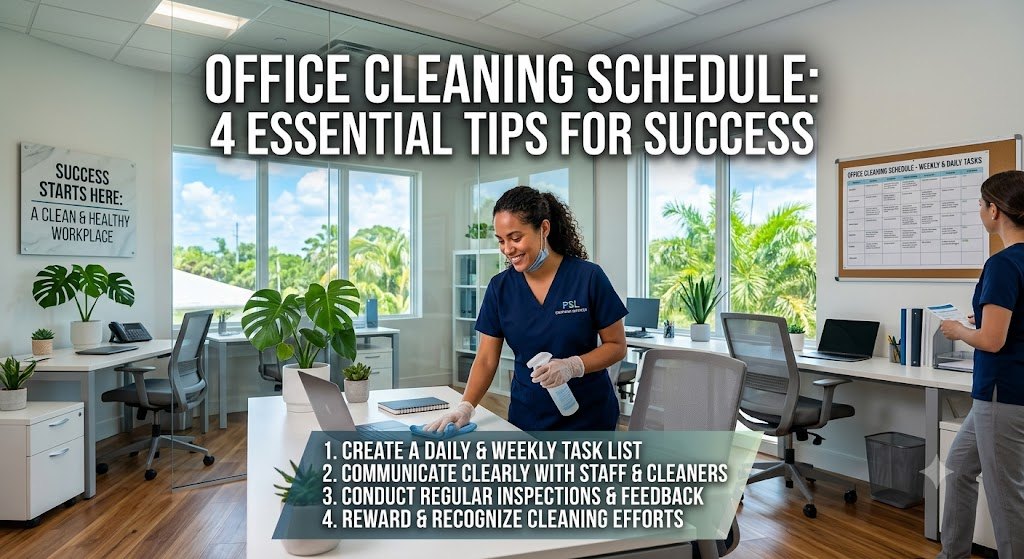
Office Cleaning Schedule: 4 Essential Tips for Success
"How often should our office be cleaned?" It's one of the most common questions we hear from office managers and business owners — and the honest answer is: it depends on your space. A ten-person office suite and a bustling customer-facing operation have completely different needs, and paying for the wrong schedule costs you either way: too little service and the office slides; too much and you're paying for cleaning you don't need.
The right office cleaning schedule balances your building's traffic, your team's health, your image, and your budget. With more than 25 years of experience designing cleaning programs for Northern DFW businesses, MCS Commercial Cleaning has helped offices of every size find that balance. Here's the framework we use.
1. Match Frequency to Foot Traffic
Foot traffic is the single biggest driver of how quickly an office gets dirty, so it's where every schedule should start. As a general guide:
Daily or nightly service fits high-traffic offices — 25+ employees, regular client visits, shared workstations, or any space where the public comes and goes. At this level, restrooms, trash, and high-touch surfaces genuinely need attention every business day.
Two to three visits per week suits moderate-traffic offices — smaller teams with occasional visitors, where trash and restrooms need regular attention but the space doesn't take a daily beating.
Weekly service works for small, low-traffic offices — a handful of employees, few visitors, private workstations. One thorough weekly visit keeps everything at a professional standard.
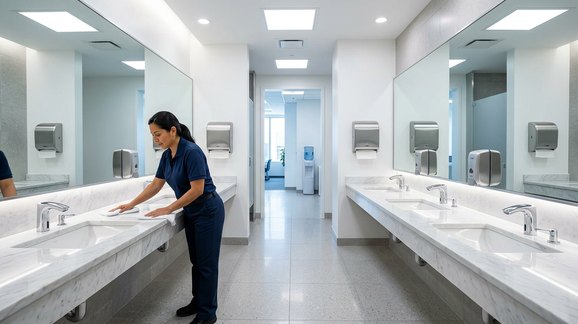
Whatever the overall frequency, restrooms and breakrooms almost always need the most frequent care. They're the first places employees notice neglect, and the fastest to develop real hygiene issues. Many offices on weekly overall service still schedule mid-week restroom visits — a smart hybrid.
2. Separate Daily Tasks from Deep Cleaning
The most common mistake in office cleaning schedules is treating all cleaning as one activity. A smart program works in layers, and understanding the layers is how you avoid overpaying.
The daily layer (or per-visit, for lower frequencies): trash and recycling, restroom cleaning and restocking, disinfecting high-touch points — door handles, light switches, shared equipment, breakroom counters — plus spot-vacuuming visible traffic areas and a kitchen reset.
The weekly layer: thorough vacuuming edge-to-edge, mopping hard floors, dusting desks, ledges, and sills, interior glass, and detail attention to conference rooms and common areas.
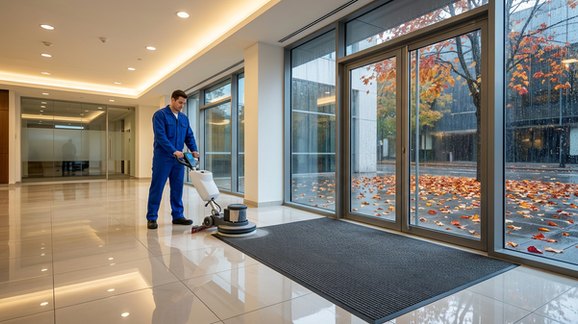
The monthly/quarterly layer: carpet extraction, high dusting of vents and fixtures, baseboards, upholstery, window blinds, and deep floor care like buffing or waxing.
Layering means your office is consistently clean without paying deep-cleaning rates every night. It also gives you a clear scope to hand any cleaning company you're evaluating — and a clear way to spot what a cheap quote is quietly leaving out.
3. Schedule Around Your Business Hours
Great cleaning should be invisible. Nobody does their best work next to a running vacuum, and clients shouldn't navigate mop buckets on their way to a meeting.
Evening service after close is the most popular solution — the crew works in an empty office and your team walks into a reset space every morning. Early-morning service before open achieves the same effect for businesses that prefer it. Some facilities benefit from split arrangements, like evening service plus a midday restroom-and-breakroom touch-up on the busiest days.
There's a trust dimension here too: after-hours service means a cleaning crew is in your space unsupervised. That's exactly why the professionalism, vetting, and consistency of the crew matter as much as the schedule itself — and why we recommend working with an established company whose staff you come to know, rather than an ever-changing rotation.
4. Review and Adjust Seasonally
An office cleaning schedule isn't a set-it-and-forget-it decision. Offices change — and good schedules change with them.
Cold and flu season is the classic example: stepping up disinfecting frequency from November through February is one of the most cost-effective sick-day reductions available. Spring in North Texas brings pollen that coats every surface near a door or window. A growing team means more traffic, more trash, and more restroom use. A new client-facing push might raise the stakes on your lobby and conference rooms.
The best cleaning partners check in proactively and adjust the plan as your needs evolve. If your current company set a schedule two years ago and hasn't mentioned it since, that's worth noticing.
A Quick Word on Cutting Cleaning to Cut Costs
When budgets tighten, cleaning frequency is a tempting line item. Just go in with clear eyes: the costs don't disappear, they move — into sick days, faster carpet and flooring wear, and the slow erosion of workplace standards that employees absolutely notice. Trimming the deep-clean layer for a season is usually smarter than gutting the daily layer that keeps germs and grime in check.
Let's Build Your Perfect Schedule
The right schedule for your office isn't a guess — it's a conversation about your space, your team, and your priorities. MCS Commercial Cleaning designs customized office cleaning programs for businesses throughout Anna, Allen, McKinney, Frisco, Prosper, Melissa, and the greater Northern DFW area, from nightly full-service programs to right-sized weekly plans.
Call (469) 667-3843 or request a free quote — we'll help you find the schedule that fits your office and your budget, and then we'll show up on it, every time.

Comments